Cybersecurity & Secure Software Development
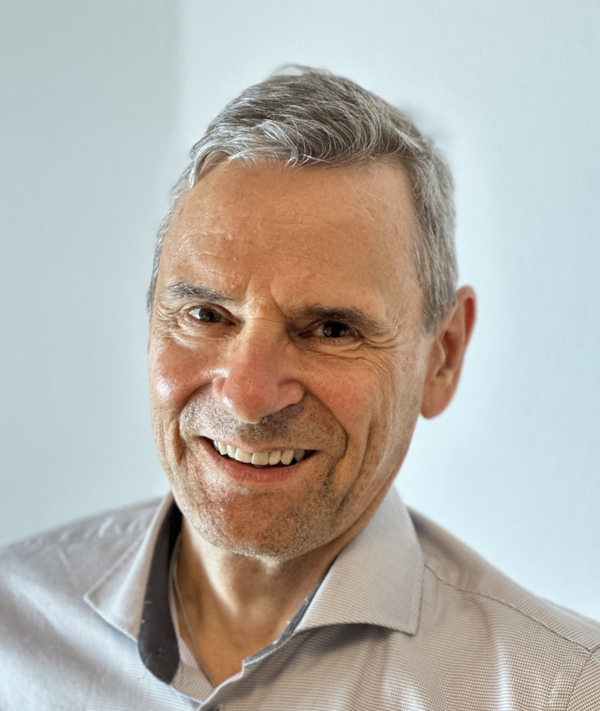
Hi, my name is Dirk. The intention of this website is to share highlights from my professional and personal journey. My passion is the intersection of regulatory compliance & quality in medical devices on one side and technology on the other. I enjoy exploring web technologies, mobile apps, embedded software, and IT networks in depth, and the challenge of securing them effectively.
You can filter my training certificates, articles, co-authored publications or my flights as a private pilot. My favorite photos are shown here.
Business logic is simulated by four examples:
- Solving a quadratic equation
- Calculating the great-circle distance on Earth
- Symmetric key encryption and decryption
- Querying CVE vulnerabilities from the NIST NVD database
My GitHub repository contains projects written in C#, Python, SQL and VBA Excel.
If you like to contact me, I am reachable via email or LinkedIn.
About Dirk
Having worked in the medical device industry for 30 years, I never planned to become a cybersecurity consultant. I started as a nuclear physicist, fascinated by atomic structures. Then I discovered medical technology - and realized that understanding complex systems could save lives, not just advance science.
For eight years at Philips Healthcare, I was a Clinical Scientist defining and testing CT imaging software. I sat in radiology departments, visited operating rooms, discussed cases with radiologists and surgeons, and learned that medical devices aren't abstract products - they're critical tools in treatment decisions.
Later, as a Team Lead for cardiac implants at Berlin Heart, I understood the weight of regulatory responsibility for Class III devices that literally pump blood through patients' hearts.
These experiences fundamentally shaped my approach to cybersecurity. When I secure a medical device today, I don't just see code and networks - I see the clinician relying on accurate data, the patient trusting the technology, and the manufacturer trying to innovate responsibly under intense regulatory pressure.
Most consultants understand information security 𝙤𝙧 medical devices. Few understand both. Even fewer have actually developed, tested, and commercialized medical devices under rigorous risk management.
My philosophy is simple but hard-won: Technology must serve humans with flexibility, pragmatism, and ethical integrity. Security isn't about perfect solutions - it's about intelligent trade-offs. Compliance isn't about checking boxes - it's about building trustworthy systems. And expertise isn't static - it requires lifelong learning.
I'm still learning: pursuing CISSP certification, coding for pleasure with C#/.NET and Python. I believe curiosity and humility are professional assets, not weaknesses.